
Rwanda After the Unthinkable: Rebuilding a State in Thirty Years
In 1994 Rwanda had no functioning government, no money, no courts and around a million dead. Thirty years on it has some of the cleanest administration in Africa — and a serious argument about what it cost.
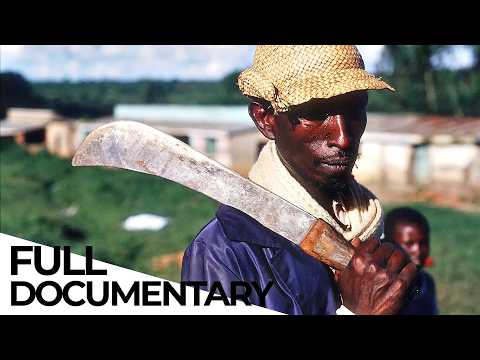
What you'll learn
- Explain how a justice system processed over a million cases when a conventional one could not
- Describe performance contracts and how public accountability for results changes administration
- Account for service delivery as a strategy for building state legitimacy after collapse
- State the documented costs in political freedom and the regional record, accurately
- Argue honestly about whether the reconstruction required the political closure
- Draw lessons for rebuilding any institution after a catastrophic failure of trust
Course content
Part 1. Start here: 1994, and what was actually left2 lessons
Part 2. Justice at impossible scale2 lessons
Part 3. Making administration work3 lessons
Part 4. Decide before you are told: July 19944 lessons
Part 5. Gacaca in the clearing: what it actually looked like7 lessons
- Two million cases, in public, in the place it happened3 min
- Gacaca justice — the courts in sessionby Journeyman Pictures15 min
- The courts questioned, ten years on (Al Jazeera)by Al Jazeera English3 min
- A convicted perpetrator’s full testimony — the hardest watch in this trackby Aegis Trust37 min
- “He murdered her children, now he’s her neighbour”by VICE News9 min
- From hatred to reconciliation — the long account (Al Jazeera)by Al Jazeera English48 min
- Healing the wounds in post-genocide Rwandaby Al Jazeera English25 min
Part 6. The development record, and what the leadership says about it4 lessons
- Thirty years, and the question of how much is real3 min
- Kagame at Harvard Business School — him making the case, at lengthby Paul Kagame38 min
- Mo Ibrahim interviews Kagame — an African critic who does not deferby Mo Ibrahim Foundation1h 16m
- “The Singapore of Africa” — the admiring framing, examinedby Wendover Productions13 min
Part 7. The cost, and the hardest question in this track7 lessons
- What is not in the brochure5 min
- Rwanda, M23 and the war in Congoby Al Jazeera English15 min
- Inside the militia running eastern DR Congoby Channel 4 News12 min
- Exiled critics who died in unexplained circumstances (Journeyman Pictures)by Journeyman Pictures11 min
- Human Rights Watch on the silencing of critics abroad — an advocacy source, weigh it as oneby Human Rights Watch5 min
- A journalist who was there: Anjan Sundaram on the crackdown on the pressby Denise Zaneza33 min
- Capstone: rebuilding after a collapse of trust45 min
Part 8. Speak on it: the hardest balance in this track3 lessons
Capstone project: Stand up and speak: five minutes, both ledgers, no escape hatch. You finish by building something real; a mentor reviews it before your certificate is issued.
About this course
Between April and July 1994 approximately 800,000 to a million people, overwhelmingly Tutsi, were murdered in Rwanda in about a hundred days, much of it by neighbours with hand tools, while the world watched and did not intervene. The state did not merely fail; it organised the killing. What followed is one of the most instructive and most contested reconstructions in modern history: a country with no treasury, no judiciary and a traumatised, divided population became known for low corruption, functioning administration, high rates of women in parliament, near-universal health insurance, and an economy growing consistently for two decades. This course studies how — the Gacaca community courts that processed a caseload no normal legal system could absorb, performance contracts that made officials publicly accountable for results, the abolition of ethnic identity in law, service delivery as a source of legitimacy, and a deliberate bet on technology and services. It is equally serious about the cost, because it must be: a dominant ruling party, suppressed opposition and press, killings and disappearances of critics, contested elections, and the Rwandan military's record in the Democratic Republic of the Congo. It ends by asking the hardest question in this track honestly.
Learners also took
Free courses that go well with this one.

Poorer Than Ghana: How South Korea Overtook Its Colonisers
In 1960 South Korea was poorer than Ghana and had just been devastated by war. It now makes the ships, cars, phones and chips the world runs on. The method was protection with conditions — and a bill paid in dictatorship.
Igba Boi: How the Igbo Build Owners Without Banks
An indigenous African apprenticeship model that turns servants into proprietors in seven years, financed by nobody, studied by Harvard — how it actually works, what it costs the apprentice, and what of it you can run.

Dangote's Bet: Build Factories Where Others Only Trade
Africa's richest man made his fortune by doing the one thing African business usually avoids — manufacturing — and by owning every link in his own chain. The strategy, the arithmetic, and the uncomfortable parts.

The Man Who Refused: Sankara and the Price of Integrity
Four years, a sold-off government car fleet, 2.5 million children vaccinated in a fortnight, women in the cabinet before Europe managed it — and a bullet at thirty-seven. What integrity achieves, and what it costs.