Die Empty: Myles Munroe on Purpose, Potential and Power
The most quoted man in African churches, taken seriously enough to be examined — what he actually taught about purpose, why it moved millions, where it is strongest, and where his critics have a point.
What you'll learn
- State Munroe's distinction between purpose, potential and vision, and use it on your own life
- Write a purpose statement specific enough to be acted on this month, not a slogan
- Explain his claim that leadership is a disposition rather than a position, and test it against real leaders you know
- Identify where an individual-purpose framework needs a structural answer it cannot give on its own
- State the main criticisms of his theology fairly, and your own reasoned response
- Build the one habit he insisted on: deliberate, scheduled use of a gift that is currently idle
Course content
Part 1. The man, and why he is worth studying rather than quoting3 lessons
Part 2. Purpose before potential5 lessons
- The order matters, and almost everyone gets it backwards3 min
- Dream versus vision — the distinction that does the work2 min
- How to know the purpose of your life — the full teachingby Munroe Global1h 14m
- Find your true purpose: the power of understandingby Munroe Global52 min
- Quiz: purpose, potential, vision4 min
Part 3. Leadership is not a position6 lessons
- Why he refused to teach leadership as management2 min
- The most important quality of a true leaderby Munroe Global3 min
- Defining true leadershipby Munroe Global57 min
- The heart of leadershipby Munroe Global1h 15m
- Discovering your personal leadershipby Munroe Global1h 47m
- Lead something nobody asked you to lead45 min
Part 4. Decide before you are told: Nassau, 19802 lessons
Part 5. Potential, and why most of it is never released4 lessons
Part 6. Character: the part nobody quotes2 lessons
Part 7. The hardest test he set himself: succession4 lessons
- The measure of a leader is what happens when the leader is gone2 min
- The Key To Successful Leadership Succession — his own teaching on itby Munroe Global1h 2m
- Passing It On — Myles Jr. and Charisa Munroe. Watch this as a case study, not a tributeby Munroe Global1h 8m
- Quiz: succession and character3 min
Part 8. Where the teaching meets a hard wall3 lessons
Part 9. Speak on it: the facts, the objections, and five minutes on your feet3 lessons
Part 10. Capstone: a purpose statement that survives your actual life1 lesson
Capstone project: Capstone: the document, the plan and the honest obstacle. You finish by building something real; a mentor reviews it before your certificate is issued.
About this course
Dr Myles Munroe said the wealthiest place on earth is the graveyard, because it is full of unwritten books, unbuilt businesses and ungiven gifts. A Bahamian pastor who grew up poor in a family of eleven, he became one of the most influential teachers on purpose and leadership in the world, and nowhere more than in Africa — where he is quoted constantly from pulpits and almost never studied. This course studies him. What he actually taught, in his own words and structure: purpose before potential, the difference between a dream and a vision, why he insisted leadership is not a position, and his most demanding idea — that work exists to release what is in you rather than to pay for your living. Then it does what a sermon cannot: it tests the teaching. Where does it hold? Where does an individual-purpose framework break against the real constraints of a young person in Africa — no capital, no connections, a family depending on this month's money? What do serious critics say about prosperity-adjacent theology, and what is the honest answer? You will finish with a written purpose statement that survives contact with your actual life, and the intellectual honesty to hold a teaching you love up to the light.
Learners also took
Free courses that go well with this one.
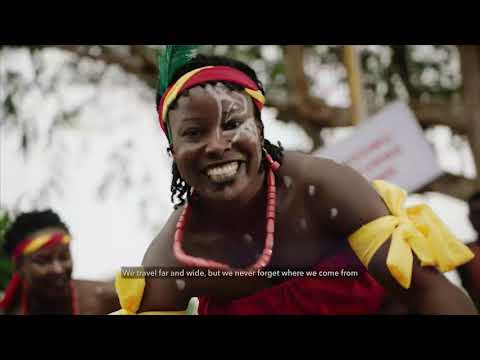
Igba Boi: How the Igbo Build Owners Without Banks
An indigenous African apprenticeship model that turns servants into proprietors in seven years, financed by nobody, studied by Harvard — how it actually works, what it costs the apprentice, and what of it you can run.

Dangote's Bet: Build Factories Where Others Only Trade
Africa's richest man made his fortune by doing the one thing African business usually avoids — manufacturing — and by owning every link in his own chain. The strategy, the arithmetic, and the uncomfortable parts.

From Swamp to Superpower: Singapore in One Lifetime
In 1965 Singapore was a poor port with no water, no army and no hinterland, expelled from its own federation. Within one lifetime it had a higher income per head than Britain. How — and what it cost.

Who Tells Your Story: Achebe and the War for the African Mind
A novel written in 1958 did more to change how the world saw Africa than any speech or treaty. How narrative power works, why Achebe wrote in English and was attacked for it, and how to take back a story about yourself.